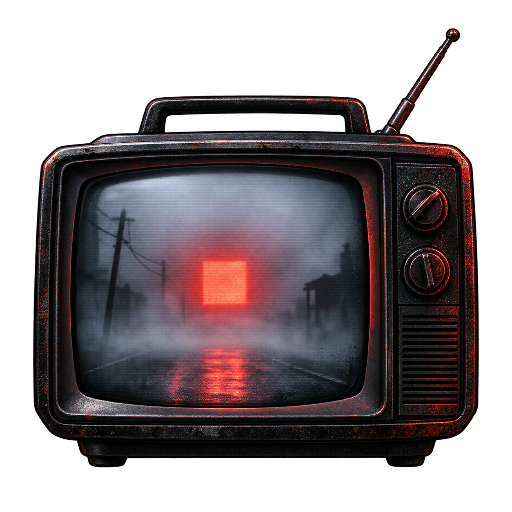
Silent Hill Townfall Review: A Tense First-Person Survival Horror Experiment
Our Silent Hill Townfall review examines its story, stealth, puzzles, combat, scares, and whether this 13-hour horror spin-off is worth playing.
Silent Hill Townfall Review: A Different Kind of Fear
The best horror games make ordinary actions feel dangerous, and this Silent Hill Townfall review finds a game that turns crouching, listening, and searching for clues into sources of constant pressure. Rather than building its identity around heavy combat, Silent Hill Townfall focuses on stealth, environmental puzzles, and an unsettling first-person view that keeps threats uncomfortably close.
Developed by Screen Burn Games, the game moves the series to a fictional coastal village in mid-1990s Scotland. You play as Simon Ordell, an American survivor who arrives in St. Amelia with an IV still attached to his arm and a troubling mystery waiting beneath the town’s abandoned streets.
At approximately 13 hours, Townfall is a focused horror adventure rather than a massive open-world production. Its strongest ideas are clear from the start: conserve resources, study your surroundings, avoid enemies whenever possible, and use obsolete technology to uncover what happened to the town.
| Key detail | Silent Hill: Townfall |
|---|---|
| Genre | Survival horror |
| Perspective | First person |
| Setting | St. Amelia, a fictional Scottish seaside town |
| Estimated length | About 13 hours |
| Core gameplay | Stealth, exploration, puzzles, limited combat |
| Main character | Simon Ordell |
| Era | Mid-1990s |
| Review focus | Story, atmosphere, combat, puzzles, scares, value |
Story and Setting
St. Amelia immediately feels like a place that has been abandoned in stages. Storefronts are empty, homes are marked for sale, and protest signs reference an organization called the CEG. The town is not simply deserted; it feels as though its population left behind evidence of a crisis that nobody was willing to explain.
Simon’s arrival adds a personal layer to the mystery. His hospital bracelet and attached IV suggest that he is running from, or toward, something connected to his past. The story gradually links his guilt and trauma to the events affecting St. Amelia, while introducing themes that feel distinct from the series’ familiar psychological horror.
| Story element | How it works |
|---|---|
| Central mystery | Simon investigates the collapse of St. Amelia |
| Recurring themes | Guilt, trauma, corporate greed, environmental damage |
| Narrative structure | Exploration, discoveries, environmental clues, perspective changes |
| Spoiler approach | Major character identities and late revelations are best experienced firsthand |
| Tone | Bleak, surreal, investigative, and occasionally grotesque |
The game’s environmental storytelling is especially effective. A strange public demonstration, an abandoned residence, or a damaged office can reveal more about St. Amelia than a long exposition scene. The most disturbing images function as visual metaphors for the town’s corruption, including industrial structures that seem to consume the streets and monstrous forms that stretch across rooftops.
Townfall also occasionally changes playable perspectives. These sections provide important context without completely dismantling the mystery surrounding Simon. The approach gives the supporting cast greater relevance and helps explain how the town’s tragedy affected different people.
Simon is initially restrained to the point of seeming emotionally distant. That choice may make the opening hours feel muted, but his subdued personality works better as the story becomes more personal. Compared with the theatrical protagonists of some earlier Silent Hill games, he comes across as more exhausted and believable.
Atmosphere and First-Person Horror
The biggest change in this Silent Hill Townfall review is the game’s first-person presentation. The perspective makes ordinary exploration more intimate: opening a door, leaning around a corner, or checking a dark hallway becomes a commitment because the player cannot see Simon from behind.
Townfall also uses a letterboxed widescreen presentation. The reduced vertical view gives narrow corridors and confined interiors a more cinematic appearance, but it also limits how much of the environment you can see at once. That restriction supports the horror design, particularly when enemies can be heard nearby but remain outside your field of view.
The game’s visual language shifts between decayed realism and grotesque surrealism. Familiar horror spaces appear, including derelict apartments and unsettling medical facilities, but they are joined by more unusual locations and transformations.
| Visual feature | Effect on gameplay and mood |
|---|---|
| First-person camera | Makes encounters feel immediate and personal |
| Letterboxed presentation | Increases claustrophobia in confined spaces |
| Crimson-lit alleys | Creates visual disorientation and danger |
| Industrial pipes and tentacles | Reflect the town’s corruption through visual metaphor |
| Fallen bloated corpses | Establishes a disturbing, unpredictable world |
| Decayed interiors | Connects the game to classic survival horror design |
The atmosphere is more consistent than the jump scares. Early on, the CRTV can reveal threats through walls and reduce some of the uncertainty that usually makes horror frightening. This means the opening sections are often tense without being especially surprising.
Later sequences make better use of helplessness. One extended area removes the CRTV and places the player in an office building populated by motionless figures. The enemies remain still until the player turns away, creating a simple but effective rule: checking the room does not mean the room is safe.
Townfall may not deliver the same intensity as the strongest moments in the Silent Hill 2 remake or other recent first-person horror games, but it rarely loses its oppressive mood. Its fear is based less on nonstop shocks and more on the expectation that a familiar space could change without warning.
Stealth, Combat, and Survival Mechanics
Combat in Townfall is deliberately uncomfortable. Simon can use improvised weapons such as boards and pipes, but attacks feel slow, weapons degrade, and fighting multiple enemies is risky. The design encourages players to consider escape before confrontation.
Firearms provide more stopping power but are not a solution to every problem. Ammunition is limited, reloads take time, and gunshots can draw additional enemies. A revolver or shotgun is best treated as an emergency tool rather than the foundation of a combat build.
| Option | Strength | Main drawback | Best use |
|---|---|---|---|
| Stealth | Conserves health and ammunition | Requires patience and route planning | Avoiding patrols |
| Melee weapons | Quiet and reusable for a time | Slow, fragile, and risky at close range | Isolated enemies |
| Revolver | Useful against immediate threats | Limited ammunition and loud shots | Emergency defense |
| Shotgun | Strong stopping power | Scarce ammunition and high noise | Dangerous encounters |
| Throwables | Distract or briefly stun enemies | Carry limit | Creating a safe route |
| Hiding places | Break pursuit after line of sight is lost | Unsafe if used too early | Escaping a patrol |
The environment supplies several tools for passive play. Bottles and bricks can distract enemies, while radios can pull patrols away from important routes. Hiding places such as wardrobes are useful, but they are not automatic safety zones. You need to break an enemy’s line of sight before hiding, or certain persistent stalkers may pull Simon out and force a restart from the last save point.
A practical approach is to separate enemies into three categories:
- Patrolling enemies: Observe their routes and move after they pass.
- Sound-sensitive enemies: Use thrown objects and radios to redirect them.
- Persistent stalkers: Avoid detection entirely when possible because hiding may not work.
The resource system is more forgiving than the inventory design in Silent Hill f. You can carry ammunition and medical items without constantly rearranging the entire inventory. The main limits concern two throwable items and one melee weapon at a time, which keeps decisions meaningful without turning item management into busywork.
There is also light crafting. Bandages can be improved with alcohol, while an IV bag can restore some health after Simon is downed. The IV mechanic acts as a limited safety net, giving players more confidence to explore optional areas instead of returning to a save point after every encounter.
Puzzles and 1990s Technology
The CRTV is both a survival tool and a puzzle device. Its distorted video feeds can show locations or objects connected to the next objective, encouraging players to compare what appears on the screen with the surrounding environment.
This design is more interesting than following a constant map marker. You are asked to interpret a clue, search for a matching location, and then determine how the environment connects to the video. The CRTV therefore supports both navigation and world-building.
Townfall’s other puzzles draw heavily on 1990s technology. Desktop computers, floppy disks, slide projectors, microcassette recorders, and payphones are not just decorative props. They often determine how you access documents, manipulate spaces, or reveal information.
| Puzzle technology | Typical function |
|---|---|
| CRTV | Reveals clues and helps track threats |
| Floppy disks | Stores or unlocks digital information |
| Desktop computers | Provides documents and interaction points |
| Slide projectors | Presents visual evidence or codes |
| Microcassette recorders | Alters or reframes parts of a location |
| Payphones | Supports communication and saving progress |
| Dot-matrix printers | Adds tactile detail to office puzzles |
The tactile quality of these interactions is one of the game’s most distinctive features. Loading a disk, entering numbers into a physical keypad, or waiting for a printer to finish produces a sense of friction that modern interfaces usually remove. That friction is valuable in a horror game because it makes progress feel deliberate.
Some puzzles are excellent because they combine mechanical interaction with surreal consequences. A recorder that shifts a house between different states, for example, turns a familiar domestic environment into a problem involving time, memory, and spatial observation.
The late-game puzzle design is less consistently successful. One major contraption can be difficult to understand without enough feedback, creating confusion rather than satisfying discovery. Hints can be enabled in the options menu, so players who want a smoother pace have an escape valve.
| Puzzle preference | Recommended setting |
|---|---|
| You enjoy deciphering clues independently | Keep hints disabled |
| You want steady story progress | Enable hints |
| You dislike trial and error | Use hints for late-game machinery |
| You enjoy retro technology | Investigate optional terminals and devices |
| You prefer action over puzzles | Expect a slower, more investigative experience |
Is Silent Hill Townfall Worth Playing?
This Silent Hill Townfall review recommends the game for players who value atmosphere, environmental puzzles, and stealth over constant combat. Its first-person camera, Scottish setting, and focus on 1990s technology give it a clear identity within the franchise.
The game is less compelling for players who want fast action or frequent combat upgrades. Melee encounters are intentionally awkward, ammunition remains scarce, and several enemies are designed to be avoided rather than defeated. That can feel restrictive if you approach Townfall like a traditional action game.
| Player type | Recommendation | Reason |
|---|---|---|
| Silent Hill fans | Recommended | Familiar psychological themes with a new setting |
| Stealth-horror fans | Recommended | Enemy avoidance and sound manipulation are central |
| Puzzle-focused players | Recommended with caveats | Strong ideas, though some late puzzles are obscure |
| Action-horror fans | Mixed | Combat is limited and deliberately sluggish |
| First-person horror fans | Recommended | The camera supports close, claustrophobic encounters |
| Players seeking a short campaign | Recommended | The roughly 13-hour length stays focused |
The main weakness is uneven scare pacing. The CRTV can make early threats easier to anticipate, and not every monster encounter is equally memorable. Still, the game’s oppressive sound design, grim environments, and unsettling transformations maintain a reliable baseline of dread.
Based on the supplied review source, the strongest parts of the experience are:
- A compelling mystery built around guilt and institutional wrongdoing.
- A first-person perspective that makes exploration more vulnerable.
- Puzzles that use period technology as a meaningful gameplay system.
- Stealth mechanics that reward patience and environmental awareness.
- A manageable campaign that avoids unnecessary padding.
For additional release information and platform details, consult the official Silent Hill game website.
Final Verdict
The central conclusion of this Silent Hill Townfall review is that the game succeeds because it understands what makes survival horror effective: limited information, vulnerable movement, meaningful resource choices, and spaces that feel increasingly wrong the longer you study them.
Its combat is not the star, and its puzzles occasionally become too opaque. However, the combination of first-person horror, retro technology, environmental storytelling, and stealth creates a memorable spin-off with a personality of its own.
Final rating: 8/10
Townfall is a strong recommendation for anyone who prefers creeping tension to constant violence. It does not reinvent every part of the Silent Hill formula, but it gives the series a focused new direction and turns a decaying Scottish town into one of its most distinctive recent settings.
FAQ
How long is Silent Hill Townfall?
The campaign takes approximately 13 hours to complete, depending on how quickly you solve puzzles and whether you explore optional areas. Players who use hints may finish more quickly, while those who investigate every clue may spend longer in St. Amelia.
Is Silent Hill Townfall an action game?
No. Silent Hill Townfall is primarily a survival horror and stealth game. Simon has access to melee weapons and firearms, but limited ammunition, slow attacks, weapon degradation, and enemy behavior all encourage avoidance over direct confrontation.
Does Silent Hill Townfall have difficult puzzles?
Most puzzles are manageable if you carefully inspect the environment and use the CRTV clues. Some late-game machinery is significantly less intuitive. The options menu includes hints for players who want to keep the story moving.
Is Silent Hill Townfall worth buying?
This Silent Hill Townfall review recommends it for fans of atmospheric horror, first-person exploration, and technology-based puzzles. It is a less suitable choice for players looking for fast combat, abundant weapons, or frequent action sequences.
Related Guides
Silent Hill Townfall Before You Buy: Gameplay, Story, Length, and Verdict
Our Silent Hill Townfall before you buy guide covers stealth, puzzles, combat, story, playtime, scares, and who should play this horror spin-off.
Silent Hill Townfall Gameplay Review: Atmosphere, Combat, Puzzles, and Survival Tips
Our Silent Hill Townfall gameplay review examines its story, stealth, puzzles, combat, atmosphere, length, and practical survival tips.
Silent Hill Townfall Metacritic Score Explained: Reviews, User Ratings, and Verdict
See the Silent Hill Townfall Metacritic score, critic consensus, user ratings, strengths, weaknesses, and whether this horror spin-off is worth playing.